
Long-Term Management Plan(12th)
- Vision
-
A platformer for the circulation of food value:
more local, then more globalWe will integrate the power of the human resources we have cultivated
with innovative capacity through digital technology,
establishing firmer roots in local communities then branching out globally
toward the future as a leader co-creating food value.
The value-creation cycle
The KOKUBU Group will leverage the strengths we have cultivated over 300 years (“input”), implementing a strategic outline and value chain business model (“activity”) to create social and economic value (“outcome”). These results will then further solidify the Group’s foundation, becoming new input for the next stage of growth. This value-creation cycle is precisely the vision of our 12th long-term plan.
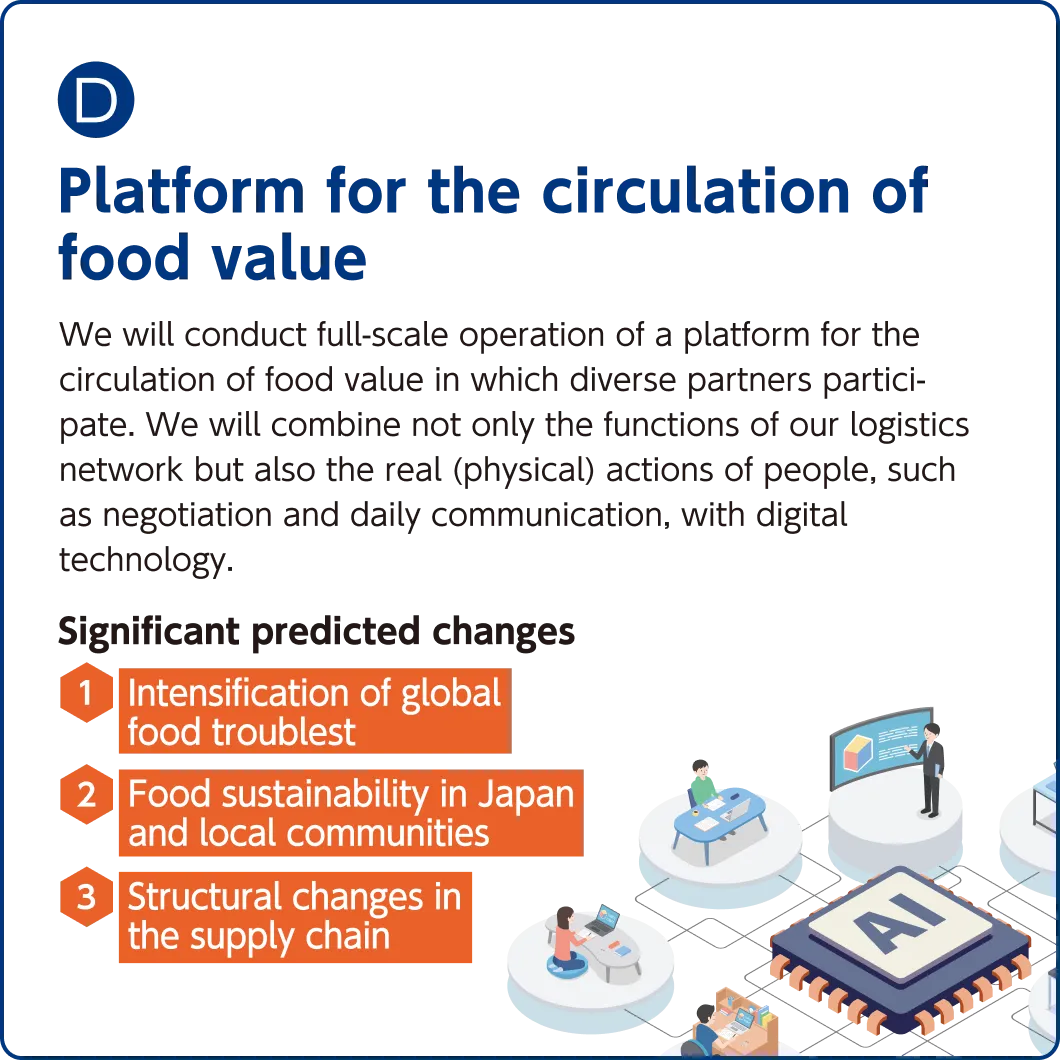
We will connect cutting-edge technology, including AI, with the experience and knowledge of individual employees, and the various events that arise at local field sites, to build a platform for the circulation of food value. In a society that continues to change rapidly, we will skillfully discover diverse possibilities, offering value beyond our clients’ imaginations and leading the building of a new food supply chain.
Six future undertakings
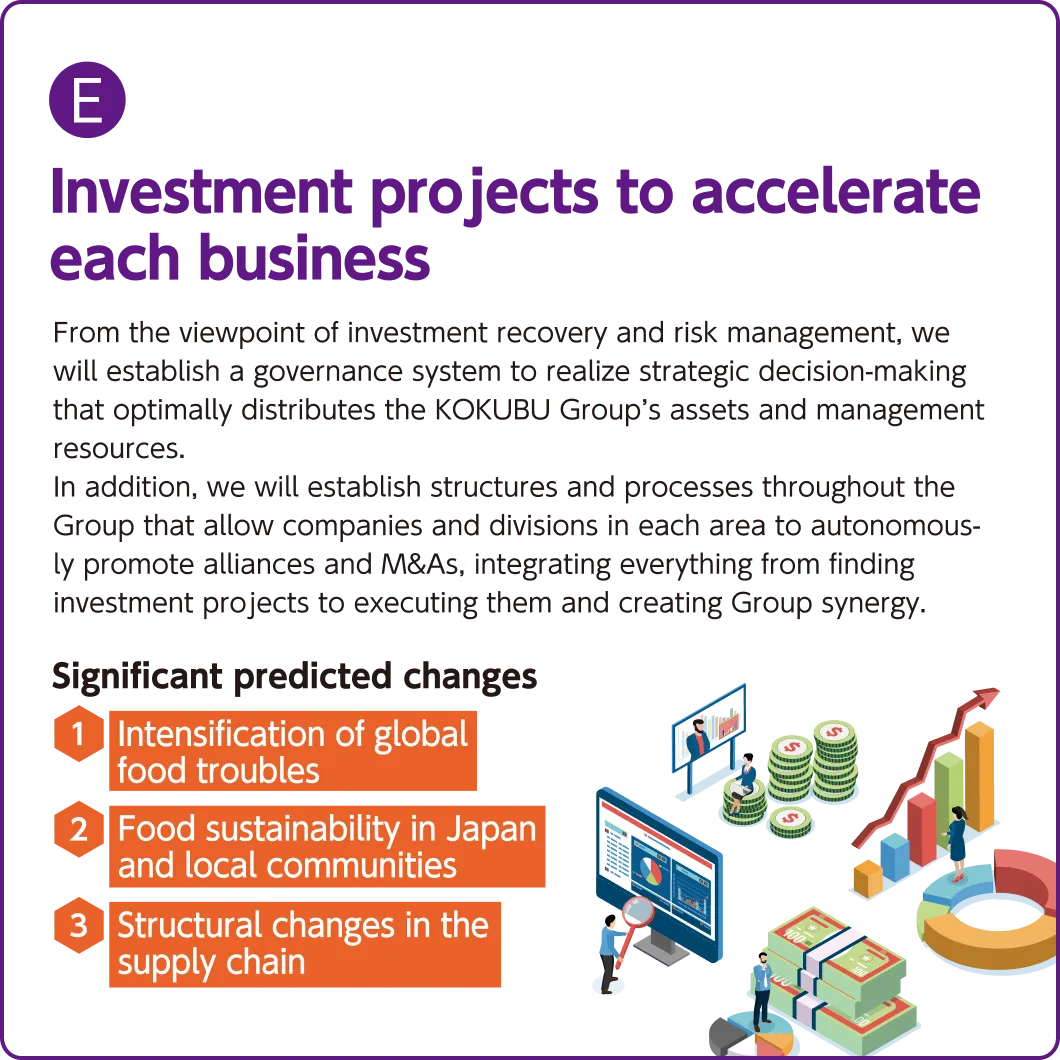
Various challenges including global warming, security issues, societal aging, and the declining population have risen to the surface, and this is a time in which it is difficult to predict the future. Our 12th long-term plan has devised six future undertakings to achieve our social mission and sustainable corporate growth.
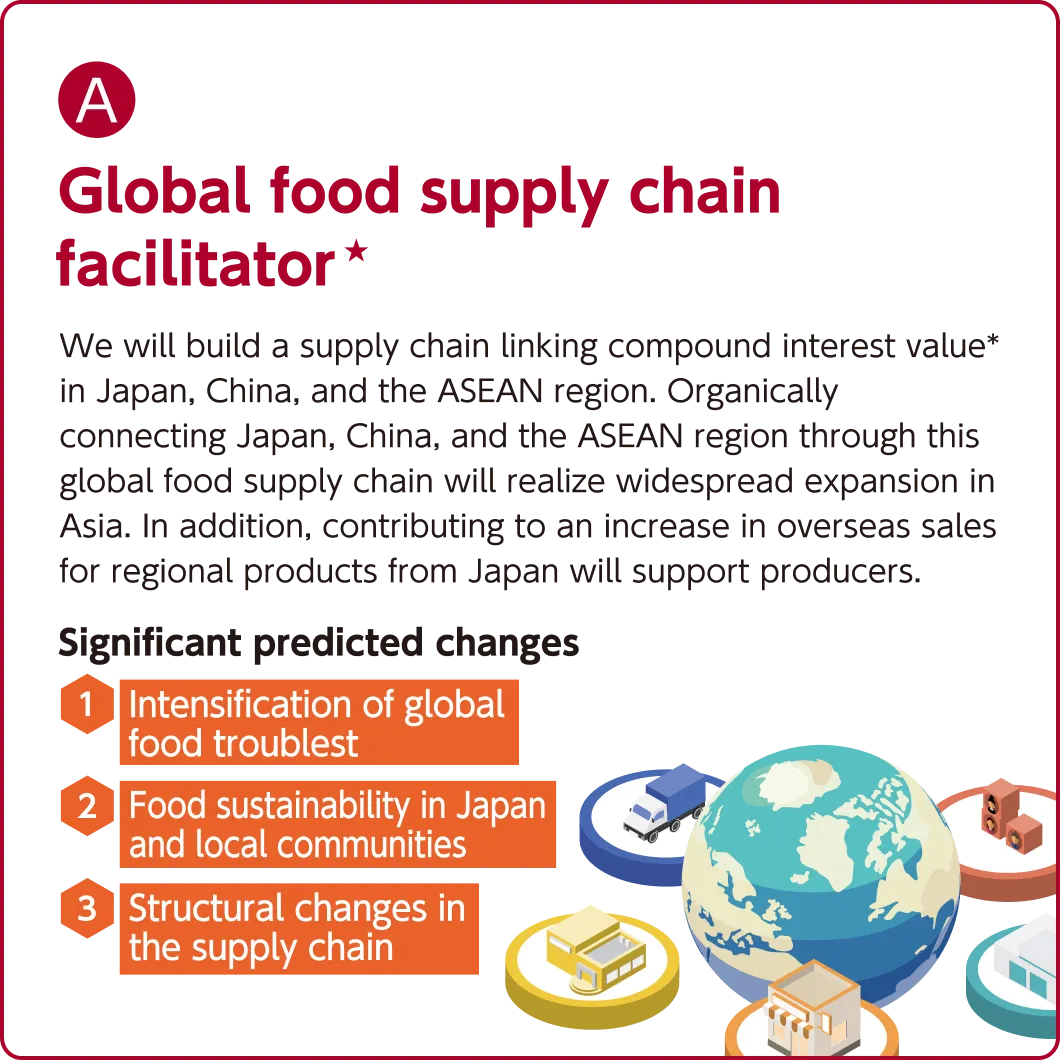
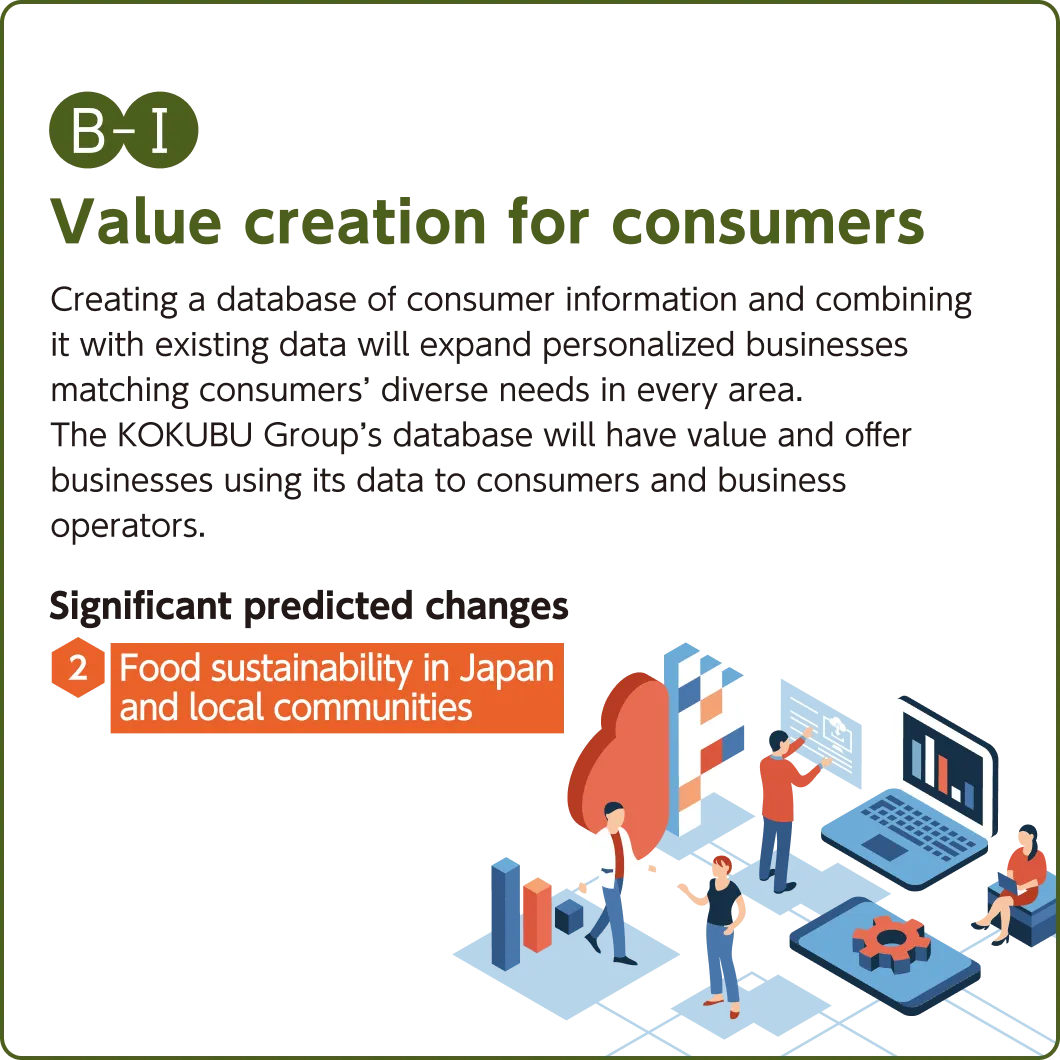
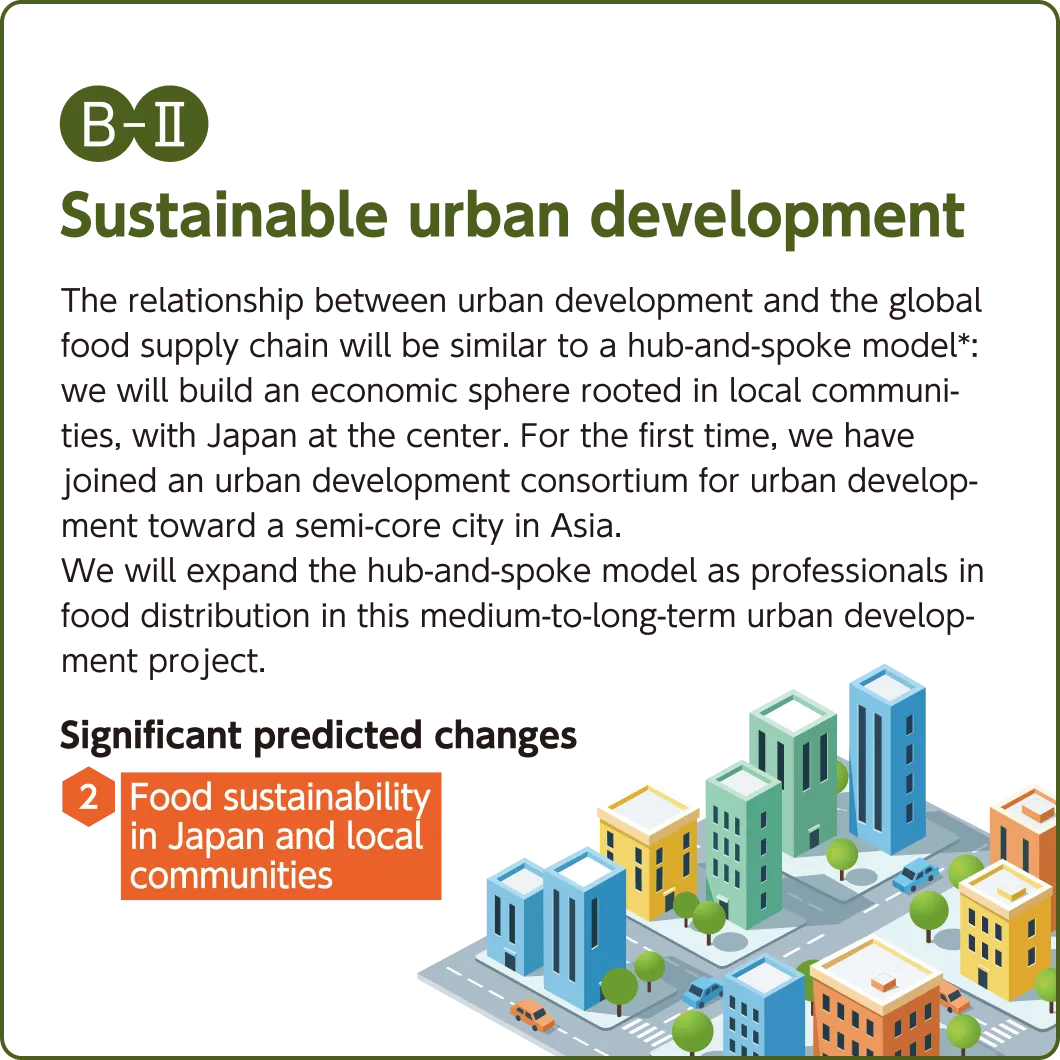
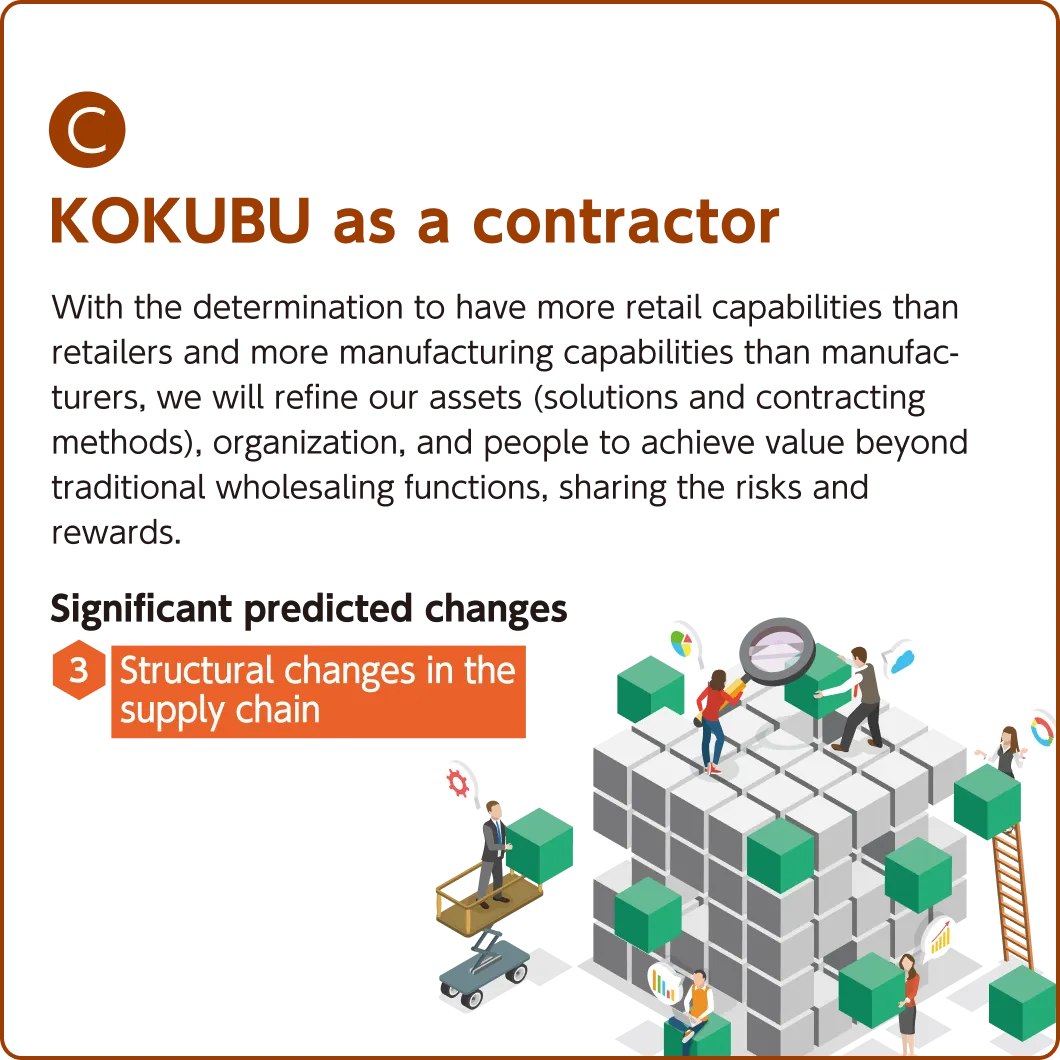
Striving for a sustainable society and company
In recent years, environmental and social issues such as climate change, resource depletion, and human rights and labor problems have grown more severe and are being carefully monitored worldwide. There is strong demand on companies for sustainability initiatives due to the changed consciousness of investors and consumers, and also tightened regulations in various countries. Corporate management is based on a relationship with the environment and society, and the implementation of sustainability management is essential to the realization of sustainable growth.
The achievement of our SDGs Statement is at the core of the KOKUBU Group’s sustainability management.
- SDGs Statement
-
“We will pass on the business we have built up over 300 years to the next generation.
We will create happiness and smiles for everyone across the globe through food.”
Since our founding in 1712, for the past 300 years or so the KOKUBU Group has created a culture around food. On many occasions, the continuation of our business has come under threat from the social landscape, lifestyle changes, and natural disasters. However, our predecessors, through their response capabilities and strong will to carry on the business regardless of the difficulties they were facing, passed on their experiences to the present in their pursuit of food sustainability. We must pass on this DNA of ours to the next generation. Through food, we will create a society in which the people of the world can rejoice from the heart and be happy.
The KOKUBU Group designated material issues to achieve our SDGs Statement in 2020. Materiality indicates important matters that must be prioritized as initiatives in our own business activities in order to achieve the Company’s goals of realizing a sustainable society, and it is the basis of all our strategies. Material issues change according to the market, society, and regulations, and the KOKUBU Group has also redefined nine material issues along with the formulation of our 12th long-term plan.
We will constantly face these goals linked to the vision in our 12th long-term plan and pass on food that creates happiness and smiles for everyone across the globe with all of you.
Nine material issues by theme
